27 March 2026 · 6 min read
The gold that remembers the hand
To divide the work is to save time. To refuse it is to gain something else — something that cannot be measured, but that can be seen.
By Camilla Roy, goldsmith

In most manufactures, gold passes through ten or so pairs of hands. One casts, another rolls, a third cuts, a fourth polishes. Each is very good at their gesture. The result is precise, regular, irreproachable — and entirely anonymous.
We do the opposite. Each piece of gold that surrounds our cases is followed, from ingot to final polish, by a single goldsmith. It is slower. It is more expensive. And it is, I believe, the only way to produce a piece that remembers having been made.
The gesture that leaves a signature
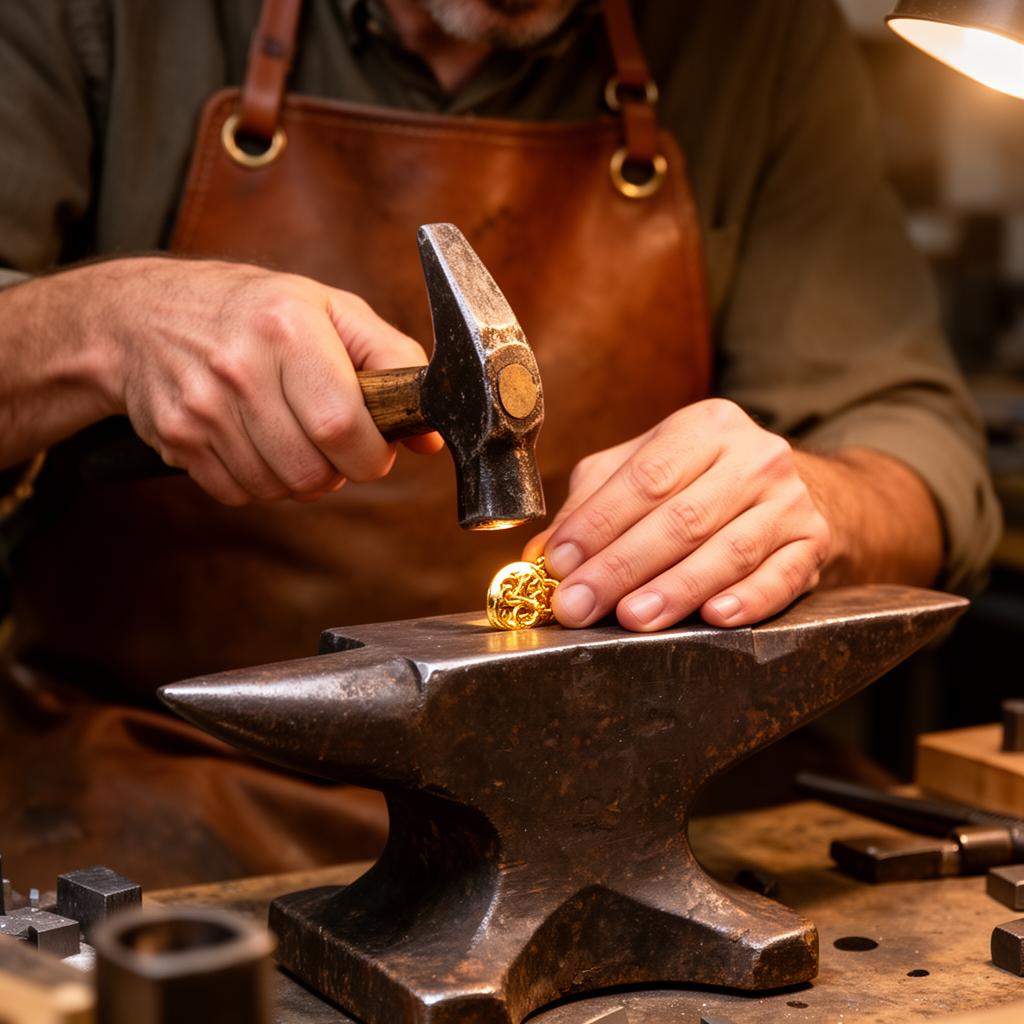
When the same artisan hammers for four hours, the strikes change imperceptibly. The wrist tires, breath falls into the rhythm of the hammer, and the piece receives a texture no machine knows how to reproduce — not an irregularity, but a coherence. Each strike is cousin to the one before. That, to my eye, is the signature of a hand: not a visible defect, but a kinship across every gesture.
“I want it to be said of every bezel: Camilla made this. Not the workshop. Camilla.”
What it costs, what it gives
An 18ct gold bezel, with us, takes between twenty-two and twenty-six hours of work by one person. In a divided organisation, the same technical result is reached in seven. We accept this factor of three because it buys one precise thing: the possibility, for whoever wears the piece, of knowing who made it, and for the artisan, of answering for the result without hiding behind a chain.
On the reverse of every case, the goldsmith's hallmark is engraved beside the edition number. It is not decorative. It is a contract.
Atelier Lignum Aureum
Camilla Roy, goldsmith