4 February 2026 · 11 min read
Bog oak: five thousand years to the wrist
Beneath the peat of Ireland sleep oaks that fell before the invention of writing. Here is how one of them comes, in the end, to measure the hours of a contemporary wrist.
By Edward Whitmore, master of the workshop
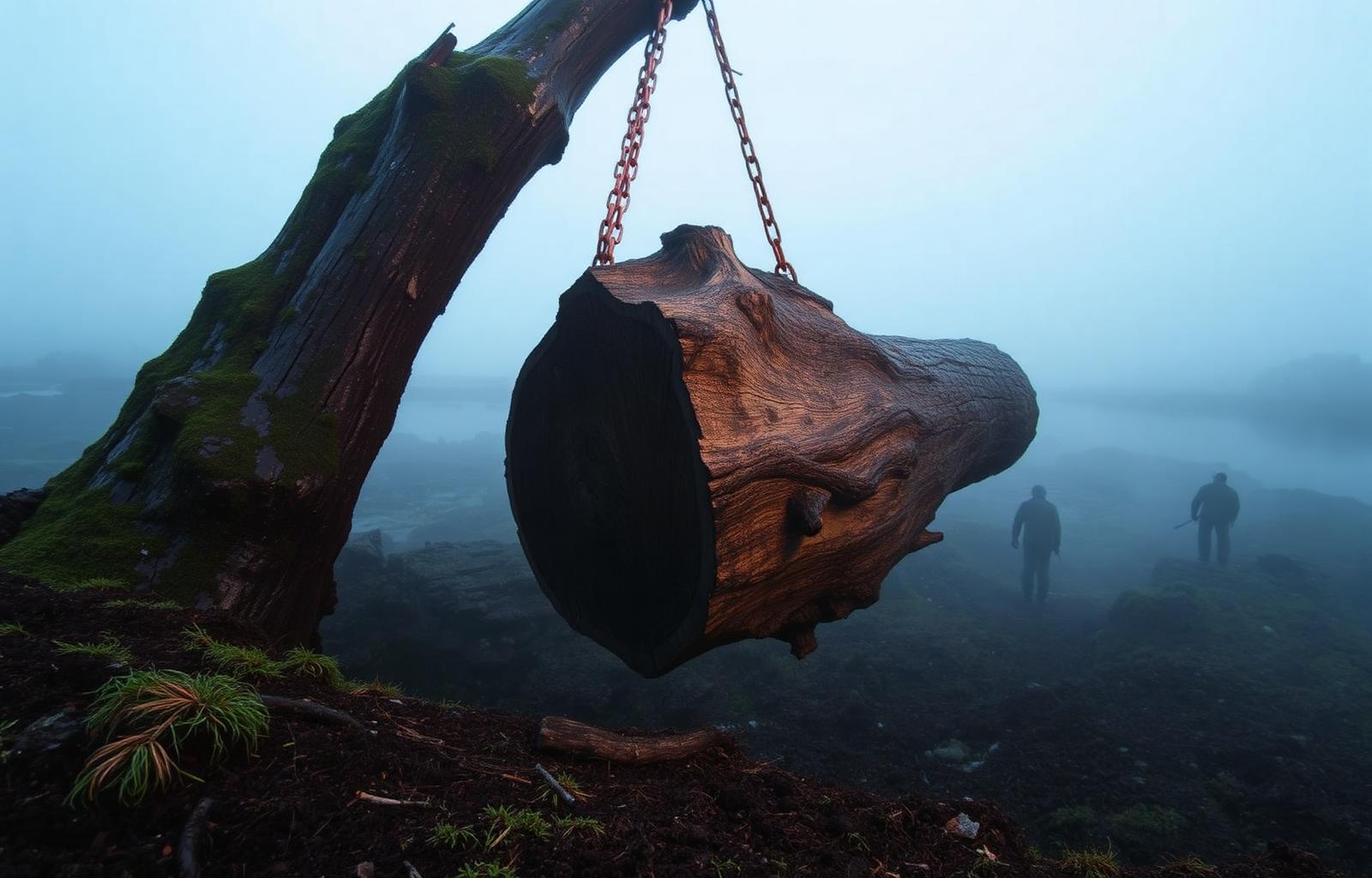
Bog oak is not a rare wood in the commercial sense. It is rare in the geological sense. When a tree falls into an acidic, oxygen-poor peat bog, it does not rot: it slowly mineralises, over millennia, absorbing the tannins and the iron dissolved in the black water. Five thousand years later, it is recovered almost intact, but transformed: its colour has turned to deep black, its density has doubled, its grain has tightened until it resembles soft stone more than wood.
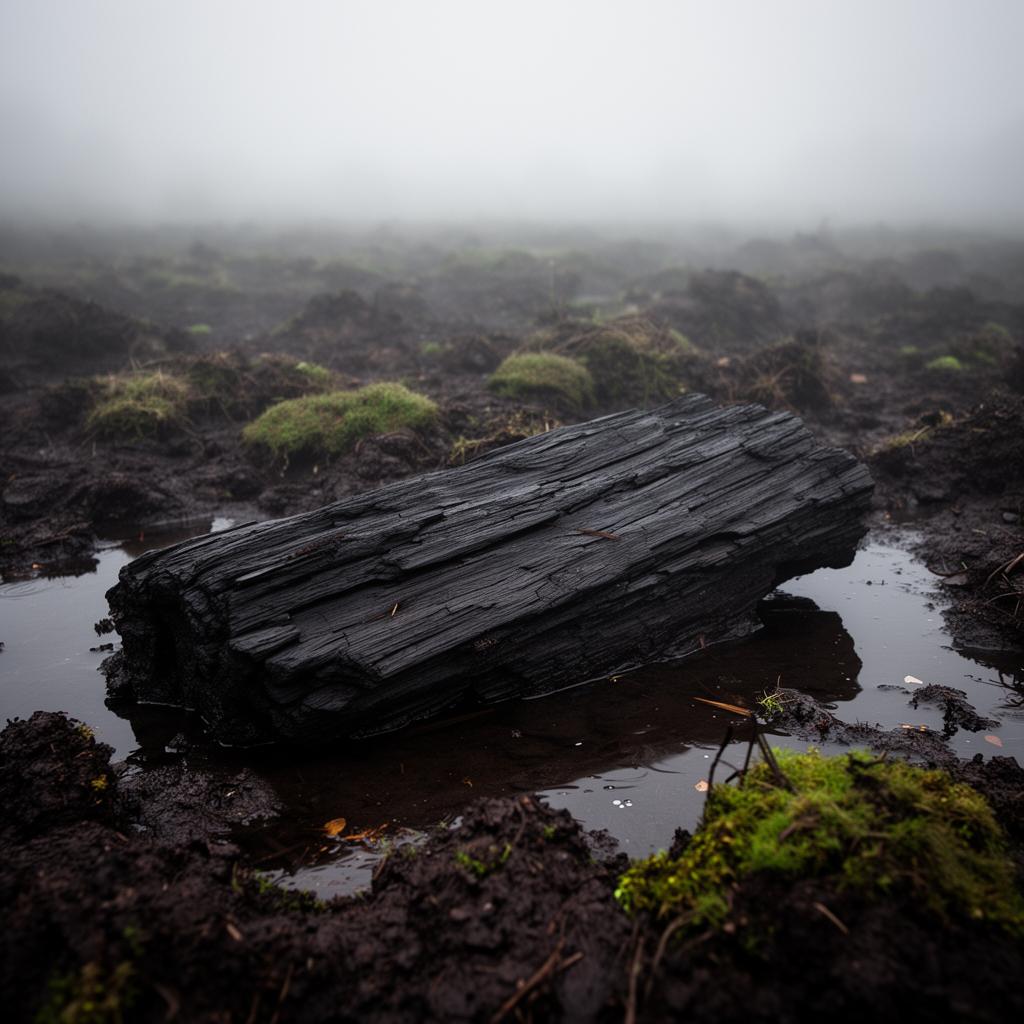
Extraction, which cannot be industrialised
We work with two families of extractors in counties Galway and Mayo. They do not dig: they wait for the bogs, harvested for fuel for centuries, to surrender their billets of their own accord. It is opportunity work, not production. One season may yield three usable billets. Another, none.
Each billet is carbon-14 dated by a Dublin laboratory before being shipped. We keep that certificate of age in the archive file of the piece it will become. The client receives a copy; the original stays at the workshop.
Drying, which takes further years
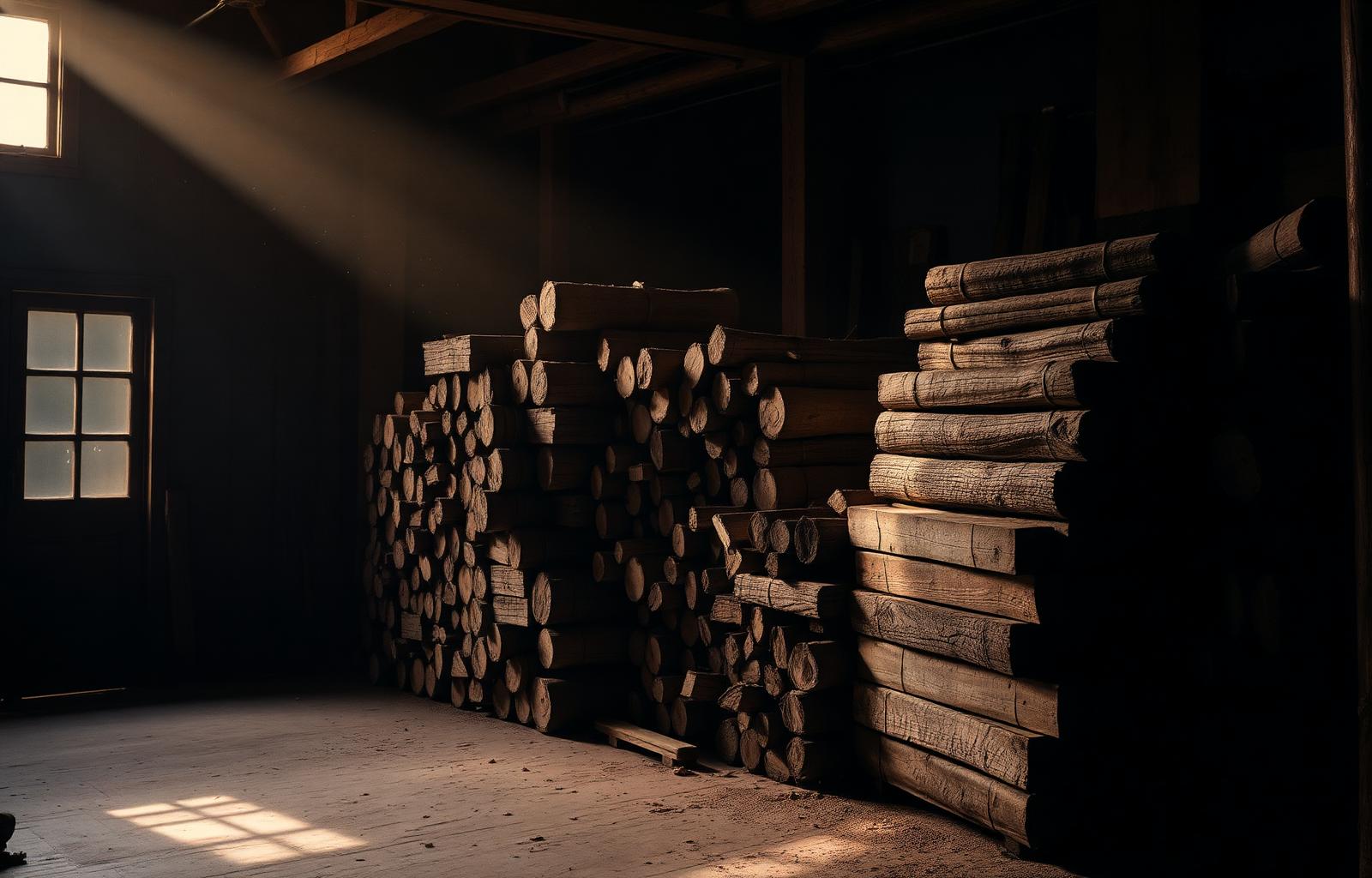
Wood that has spent five thousand years in water does not dry in six months. On arrival in Clerkenwell, a billet still contains forty to fifty percent moisture, and every percent lost too quickly opens a crack. We count six to eight years of gradual drying in the cellar before the first cut. It is longer than the wait for ordinary oak — not because the wood is more difficult, but because it is more precious and any error is beyond repair.
“You cannot replace a tree that fell in 3000 BC. You can only refrain from spoiling it.”
What the wood gives
Beyond age, bog oak offers a unique material: black without dye, dense without lead, stable once dry as few woods are. Its colour is not uniform — it ranges from matte ebony to a slightly bluish anthracite depending on the depth of burial. No treatment is applied; what you see is what the bog has done over five millennia.
We limit the use of this material to a single piece per year. Not as marketing — out of decency.
Atelier Lignum Aureum
Edward Whitmore, master of the workshop